7 Best SEO Tools for a One-Person Business

You run a business. You do not have a spare afternoon to learn a new dashboard, and you definitely do not want to pay for five subscriptions you will open twice. So the question is not whether you need help with search visibility. It is which of the best seo tools actually earn a place in your week when you are the only person doing the work.
This post walks through seven kinds of tools, in the order I would add them, and tells you plainly what to skip. By the end you will know what to buy, what to use free, and what to ignore on purpose. You will also know the one habit that makes any tool work at all.
Start With One Keyword Tool, Not Five
Keyword research is the first job because everything else depends on it. You cannot write a page that ranks if you do not know what people type into search. One tool is enough for this. Two or three tools will just show you slightly different numbers and send you in circles.
A keyword tool does three simple things. It tells you roughly how many people search a phrase each month (search volume). It estimates how hard it would be to rank for that phrase (difficulty). And it suggests related phrases you had not thought of. That is the whole job.
Say you are a plumber. You type in "water heater repair" and see decent volume and moderate difficulty. You also see related terms like "water heater not heating" and "tankless water heater service." Now you build one clear page around water heater repair and mention those related phrases naturally. That single page can bring you calls for years.
Here is where people get stuck. They open three tools, compare volume numbers that disagree, and never write the page. The data is not the work. The page is the work.
Pick one tool, pull your terms, close the tab, and go write. I would start with whichever keyword tool you find least confusing, even if a different one has fancier charts.
Do Not Compare Numbers Forever
Different tools estimate volume differently, so the numbers will never match exactly. Treat them as rough guides, not facts. If one tool says 400 searches a month and another says 700, the answer is the same: it is worth a page.
The Best SEO Tools for Small Business Are the Ones That Show You the Fix
A report full of red warnings feels productive. It usually is not. If a tool tells you that 47 things are wrong and does not tell you what to do about any of them, you have bought anxiety, not help.
A site health audit should cover the basics: broken links, missing page titles, duplicate titles, slow loading pages, and pages that search engines cannot read. Those are real problems with real fixes. The best seo tools for small business put the fix next to the problem, in plain language, with a button or a line of text you can copy.
Picture a service page with no title tag. That is the line of text that shows up as the blue link in search results. Without one, search engines guess, and the guess is often bad. The fix is one line: write a title that names the service and the town or region you serve. That takes two minutes and can change how often the page gets clicked.
Judge every audit tool by one question. After I read this report, do I know what to do next? If the answer is no, the tool is not saving you time. It is spending it.
Fixes Beat Scores
A health score of 68 means nothing on its own. A list of five specific fixes, in order of impact, means everything. Look for the list, not the score.
Free SEO Tools for Small Business Cover More Than You Think
You can get a long way without paying anything. Free seo tools for small business handle the core tasks well, and the gaps only start to matter once you have real momentum. Here is what free genuinely covers.
- Checking whether your pages are indexed. You can search for your own page address in a search engine and see if it appears. If it does not, that is your first problem to solve, and it costs nothing to find out.
- Basic keyword ideas. Free keyword tools and search engine autocomplete will give you more phrase ideas than you can write about in a year.
- Site speed checks. Free page speed tests tell you whether your site loads fast enough on a phone, which is where most of your visitors are.
- Listing and review management. Your business profile on the major search and map platforms is free to claim, free to update, and free to post to.
- Basic rank checking. You can manually check where you show up for a handful of phrases once a month without paying a cent.
Where free falls short is scale and history. Free tools rarely track your rankings over time, and they cap how many pages or keywords you can watch. That matters when you have twenty pages and want to see which ones are trending up.
In practice, I would start free and stay free until a specific task becomes painful. Upgrade when you are forced to, not before. Paying for a tool you have not built a habit around is just a subscription you forget to cancel.
A Rank Tracker Only Matters If You Check It Monthly
Rank tracking tells you where your pages show up for the phrases you care about. It sounds like something you should check constantly. You should not. Search results shift daily for reasons that have nothing to do with you, and weekly checks will make you panic over noise.
What matters is movement over months, not the exact number today. Going from position 14 to position 8 over a quarter is real progress. Bouncing between 9 and 11 in a single week is not information.
Say you rewrote your main service page in January to include a clearer title and a section answering common questions. By spring, that page may have climbed several spots for your target phrase. That is the signal to write more pages like it. You would never see that pattern by refreshing a dashboard every morning.
Set a monthly reminder on your calendar. Check your handful of core phrases, write down the numbers, and compare them to last month. Then do one thing based on what you see. If a page dropped, check whether something changed on it. If a page climbed, note what you did and repeat it elsewhere.
Track Fewer Phrases, Better
Five phrases you actually care about beat fifty you never look at. Pick the ones tied to services that pay your bills.
Best SEO Tools for Local Business: Your Listings and Reviews Beat Any Dashboard
If you serve customers in a specific area, your visibility depends far more on your listings and reviews than on any software. The best seo tools for local business are often free platforms you already have access to, used consistently.
Keep these details identical everywhere: your business name, address, phone number, hours, categories, and photos. Search engines compare these across the web, and mismatches make them less confident about showing you. A wrong phone number on one listing can send calls nowhere.
Think about a cafe. Holiday hours change, and if the listing still says normal hours, people show up to a locked door. Updating those hours takes two minutes and prevents lost customers. The same cafe can ask regulars at the counter for a review, and a steady trickle of fresh reviews signals that the business is alive and trusted.
This work outperforms most paid tools for a one-person business because it directly affects whether someone nearby chooses you. A dashboard cannot fix a wrong address. Your listings can, and they are free.
Reviews Are a Habit, Not a Campaign
Ask a few customers every week rather than all of them once a year. Steady beats spiky, and it takes less effort.
How to Choose SEO Tools Without Wasting a Month
Most owners lose weeks comparing options and never settle. Here is a process that takes an afternoon and gets you working.
- Name the one job you need done first. For most solo owners that is keyword research or a site health check. Pick one, not three.
- Test a single tool against that job for two weeks. Use it on real pages, not sample data. If it does not fit how you work, drop it and try one other.
- Set a review date on your calendar, about 60 days out. On that date, ask whether the tool changed anything you did. If not, cancel it.
- Check for overlap before you add anything. If two tools both track rankings, you are paying twice for one job. Keep the one you open more often.
- Tie every tool to a task you do monthly. If nothing on your calendar connects to it, it does not belong in your stack.
That last step is the one people skip. A tool is only worth its cost if it feeds a recurring task. Keyword research feeds writing. Rank tracking feeds your monthly check.
Site audits feed your fix list. Anything that feeds nothing is clutter.
Write Your Stack Down
Keep a short list of your tools and the task each one serves. When you cannot name the task, you have your answer about whether to keep paying.
SEO Tools for Beginners: What to Ignore on Purpose
A lot of software is built for agencies managing dozens of clients. Those tools assume you have a team, a reporting schedule, and hours to spend in dashboards. You have none of those, and that is fine.
Features that look impressive but produce no action are the ones to skip. Deep backlink analysis is the classic example. It will show you a long list of sites linking to your competitors, with authority scores and anchor text breakdowns. Then what?
You cannot make those sites link to you by reading about them. You would need to pitch them, and that is a different job entirely.
I would skip backlink tools until you have pages that already rank and you want to understand why. In practice, this is where beginners burn the most time. They study link data for hours and write nothing.
Also skip anything that promises automated rankings, mass content generation, or "one click" optimization. Those either do not work or they create pages that hurt you. Slow, specific, human writing beats all of it.
Fewer Features, More Pages
A simple tool you use weekly beats a powerful one you open once. Choose boring and usable over impressive and ignored.
The Best SEO Tools Worth Paying For (and When)
Paid plans earn their cost in a narrow set of cases. You pay when a free tool has a limit you keep hitting, or when tracking history would change a decision you make. That is it.
The clearest signal you have outgrown free is volume. When you are watching more pages or phrases than the free tier allows, and you check them on a schedule, paying makes sense. The second signal is time. If a paid tool saves you an hour a month you would otherwise spend on manual checking, it is probably worth it.
Say you have grown from three service pages to a dozen. You now want to see which ones are gaining and which are flat, month over month. That is a real job a paid rank tracker does well, and at that point one subscription is reasonable.
Cancel the moment it stops earning its keep. If you skip two monthly checks in a row, you are not using it. If the data never changes what you write or fix, you are not using it. Cancelling is not failure. It is the same discipline as dropping a service line that no longer pays.
One Paid Tool at a Time
Add a second paid tool only when the first is fully in your routine. Two half-used subscriptions cost more than one used well.
The Best SEO Tools Do Not Replace a Plan
Every tool in this post is only as good as the monthly habit behind it. A keyword tool with no writing schedule produces nothing. A rank tracker you never open tells you nothing. The best seo tools are the ones attached to a routine you actually keep.
Leaving this unsolved has a cost. Your effort scatters across a dozen half-finished tasks, rankings stall, and you cannot tell what is working. A year passes and the site looks the same.
The most common mistake solo owners make is trying to do all of it alone, in fragments of time between customers. That is not a discipline problem. It is a capacity problem.
If you would rather hand it to people who do this every day, bring it to us at HaloSEO. Our team builds the plan, picks the tools, and does the work. You get back to running your business.
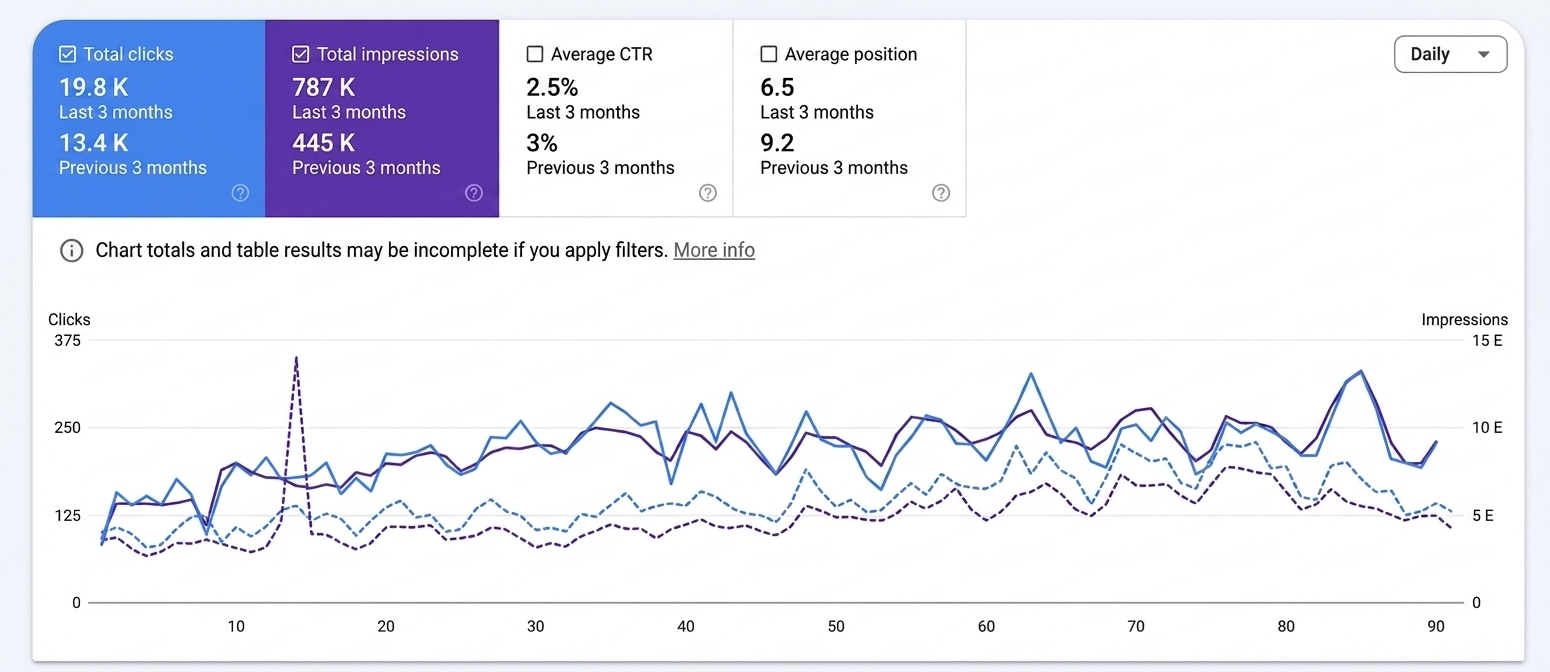
A post a day, every day, for 90 days. This is what that compounds into on a blog that starts from nothing.