
Search Engine Optimization for Local Service Businesses
If you run a service business, you already know the pattern. A customer needs a plumber, an electrician, a landscaper, or a bookkeeper, they type the need into a phone, and they call one of the first few businesses that appear. You want to be one of those businesses, but between quoting jobs, scheduling crews, and handling payroll, you have no time to study how rankings work. Search engine optimization is the discipline that decides whether your business shows up in that moment or disappears behind a competitor.
This post will walk you through what actually moves local search rankings, who should own each task, a 90 day plan you can follow, and the numbers that tell you whether any of it is working. By the end, you will know exactly where to start.
What 'Optimization' Really Means in Practice
Optimization is the deliberate alignment of a page's content, structure, and technical signals with what a searcher is trying to accomplish. That definition matters because most business owners hear "optimization" and picture keyword stuffing or a checklist of meta tags. In reality, you are trying to answer a question someone already has, in the format they expect, fast enough that they choose you over the next result.
Optimizing for a Keyword vs. Optimizing for an Outcome
Optimizing for a keyword means placing a phrase on a page and hoping it ranks. Optimizing for a customer outcome means asking what the person needs to believe before they call you. Someone searching "emergency drain cleaning" wants a phone number, a service area, and confidence you can arrive today. A page that delivers all three will outrank a page that merely repeats the phrase.
I would start every project by writing down the customer's question in plain language, then working backward to the page that answers it. That single habit prevents most of the wasted effort we see in local service business marketing.
The Three Levers: Relevance, Authority, and Experience
Every ranking decision comes down to three levers. Relevance is whether your page matches the query and the location. Authority is whether other credible sources treat you as a real business worth recommending. Experience is whether visitors find what they need without friction, which shows up in how they behave on the page.
All three must be present. A highly relevant page with no authority stalls on page three. An authoritative brand with a slow, confusing site loses the click it earned. Optimization is the repeatable process of matching intent across all three, not a one time edit you make and forget.
The Machinery Behind a Search Result

To fix rankings, it helps to understand the pipeline that produces them. The process runs in four broad stages: crawling, indexing, ranking, and serving. Crawling is a search engine discovering your page by following links. Indexing is storing and understanding that page.
Ranking is ordering the stored pages for a specific query. Serving is delivering the result to the person who typed it.
Query Understanding, Retrieval, and Re-Ranking
When someone searches, the engine first interprets the query. It decides whether the words describe a local service, a product, or a question, and it infers location from the device and the wording. It then retrieves a candidate set of pages from the index, and finally re-ranks those candidates using signals like proximity, reviews, page quality, and how people have responded to similar results before.
A local service page enters this pipeline the moment it is crawled and indexed. It can exit at retrieval if the page never mentions the service or the area clearly enough to be a candidate. It can exit again at re-ranking if competitors have stronger local signals.
Why a Page Can Be Indexed but Never Surfaced
A page can sit in the index for years and never appear for a query that matters. This usually means the page is too generic, targets a phrase nobody searches, or competes against pages with far more authority and proximity.
In practice this is where people get stuck. They see the page indexed in a search console and assume the work is done, when indexing only means the page is eligible, not that it is competitive. I would check whether the page actually appears for the queries you care about before spending another hour editing it.
The Ranking Inputs You Can Actually Influence
Not every ranking factor is available to a small business. Some are set by your market, your location, and your history. The useful exercise is sorting inputs into what you can change this quarter and what you cannot, so your effort lands where it pays.
- On-page content signals: You control the words, headings, service descriptions, and internal links on your site. Rewriting a thin service page to answer specific customer questions is one of the fastest changes available, and you can complete it in a week.
- Technical health: Site speed, mobile usability, clean URLs, and secure connections are largely within your reach. A developer can compress images, remove render-blocking scripts, and fix layout shifts, and every one of those improvements helps both rankings and bookings.
- Backlinks and brand mentions: You can earn links through local sponsorships, supplier pages, trade associations, and press coverage, but you cannot manufacture the volume a national brand has. Treat this as a slow build, not a lever you pull in a month.
- Engagement and click behavior: How often people click your result and how long they stay sends a feedback signal. You influence it through accurate titles, honest descriptions, and pages that load fast and answer the question immediately.
- Proximity and prominence: Distance from the searcher and overall brand prominence shape local results, and you cannot move your building. What you can do is strengthen prominence through reviews, citations, and consistent business information so you compete well within your radius.
The practical takeaway is that content, technical health, and local profile signals are where a service business should spend most of its hours. Backlinks and proximity are real, but they respond slowly or not at all to short term effort.
Who Owns SEO Inside a Small Business
SEO fails in small companies for an organizational reason more often than a technical one. Everyone assumes someone else is handling it. A simple responsibility split prevents that, and it works whether you keep the work in house or hire help.
A Simple Responsibility Split
The owner owns strategy and final approval, because only the owner can decide which services are worth promoting and what a lead is worth. The marketing lead owns execution and coordination, keeping the calendar moving and chasing deliverables. The developer owns technical health, including speed, indexing, and site structure.
The content writer owns service and location pages, plus any ongoing updates. The outside agency, if you use one, owns technical audits, keyword research, reporting, and the parts of the work that require specialized tools and experience. Secondary ownership should be explicit too, so the developer knows to flag speed issues to the marketing lead rather than sitting on them.
What an Agency Needs From You
An agency cannot do its part without access and information. Expect to provide analytics and search console access, a list of the services that actually generate revenue, your real service radius, and a point of contact who can approve content within a reasonable window.
The one role that must own the reporting loop is the marketing lead, even in a two person company. Someone has to look at the numbers monthly, compare them to the plan, and decide what changes next. Without that owner, reporting becomes a document nobody reads.
Turning Search Visibility Into Qualified Traffic
Rankings are only useful if they turn into booked jobs. The funnel from query to booked job has four stages, and each stage needs a specific asset behind it. Move through these steps in order and you will fix the weakest stage first.
- Choose commercial-intent queries over high-volume informational ones. A phrase like "furnace repair cost" may draw thousands of searches, but "furnace repair near me" draws people ready to book. Build your priority list from queries where the searcher has a problem and a credit card.
- Build service and location pages that match how people search. Create one page per core service and, where it makes sense, one per service area. Each page should name the service, the area, the process, and the next step, without copying the same paragraph across ten pages.
- Earn local citations and reviews that reinforce those pages. Consistent business information across directories and a steady flow of recent reviews strengthen the local signals that support your pages. Ask every satisfied customer, and make the ask part of your normal closeout routine.
- Structure calls-to-action so a visitor can book without friction. Put a phone number where a thumb can reach it, keep forms short, and state your response time. Every extra field or unclear button costs you a percentage of your leads.
- Prioritize in this order: fix the pages with impressions but no clicks, then the pages with clicks but no conversions, then expand to new services. That sequence uses existing demand before you chase new demand.
A 90-Day Plan for a Local Service Site
A quarter is enough time to see meaningful movement if the work is sequenced correctly. Rushing content before the technical foundation is stable wastes effort, and building pages before tracking is in place means you cannot tell what worked.
- Weeks 1 to 2: technical cleanup and tracking setup. Fix crawl errors, improve mobile speed, verify your analytics and search console, and confirm your conversion tracking records calls and form fills. Watch indexed page count, page load time, and tracking accuracy during this stage.
- Weeks 3 to 6: service and location page build. Rewrite your top revenue services first, then add or improve location pages for the areas you actually serve. Watch impressions and average position for each service cluster as the new pages get picked up.
- Weeks 5 to 10: authority and review acquisition. This overlaps the content work on purpose, because new pages need supporting signals. Pursue local citations, supplier and association listings, and a consistent review request process. Watch referring domains, review count, and review recency.
- Weeks 9 to 12: iteration on query and conversion data. By now you have enough data to see which pages earn clicks and which earn calls. Rewrite titles with low click-through rates, adjust calls-to-action on pages with traffic but no conversions, and drop the topics that never gained traction. Watch click-through rate by page and conversion rate by landing page.
The overlap between stages is intentional. Waiting for one workstream to finish before starting the next stretches a quarter into six months, and most service businesses cannot afford that delay.
How to Tell Whether SEO Is Working
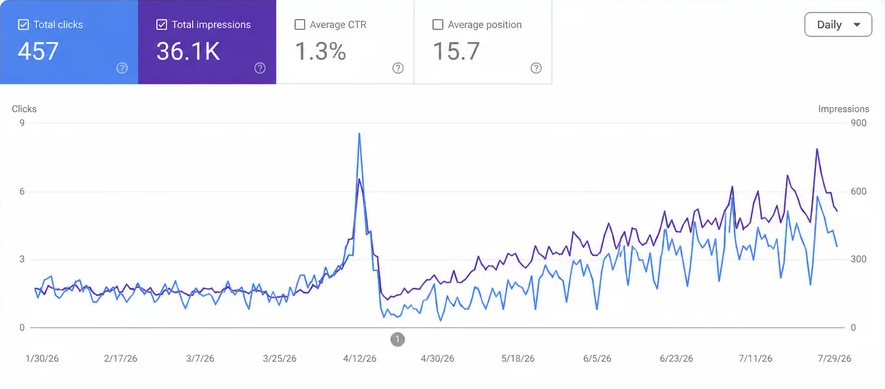
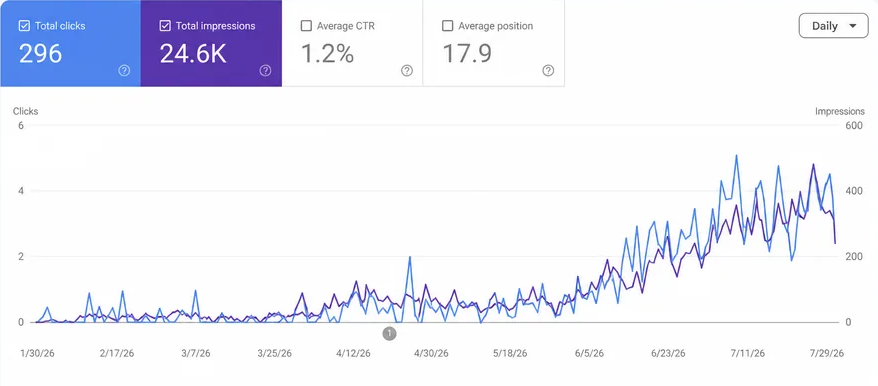
Measurement is where local SEO either becomes a real business function or quietly fades. The goal is not a single score. It is a small set of numbers that tell you whether visibility is turning into revenue.
The Core Measurement Stack
Start with impressions and average position for query clusters, not individual keywords. Group queries by service, because a cluster moving from position twelve to position four is meaningful even when no single phrase looks impressive. Next, track click-through rate by page, which tells you whether your titles and descriptions earn the click once you appear.
Then track conversion rate by landing page. A page with strong traffic and a weak conversion rate has a content or call-to-action problem, not a ranking problem. Finally, calculate cost per acquired lead by adding all SEO spend, including your time, and dividing by the number of leads attributed to organic search. That figure is what lets you compare SEO honestly against paid advertising.
Separating Ranking Movement From Seasonality
Rankings move for reasons that have nothing to do with your work. Seasonal demand shifts, competitor changes, and algorithm updates all cause movement. Compare year over year for the same month rather than month over month, and note any known seasonal pattern before drawing conclusions.
When you report to an owner or client, lead with leads and cost per acquired lead, then show the ranking and traffic detail that explains them. A report that opens with position changes invites arguments about rankings. A report that opens with booked jobs invites decisions about budget.
Common Traps That Stall Local Rankings
Most stalled local campaigns fail for one of a handful of reasons. Each trap below has a symptom you can recognize, a cause, and a fix you can assign.
Thin location pages are the most common. The symptom is a set of area pages that rank for nothing and read almost identically. The cause is generating pages by swapping the place name into the same template. The fix is to give each page genuinely local content, such as specific services offered there, local project context, and area-specific answers.
Duplicate service descriptions cause a similar problem. The symptom is several service pages competing for the same query and none of them winning. The cause is reusing one description across multiple services. The fix is to write each page around the distinct problem that service solves and the distinct customer who needs it.
Ignored Google Business Profile signals are easy to overlook. The symptom is decent website rankings with poor visibility in the local map results. The cause is an incomplete or stale profile with wrong hours, missing categories, or no recent activity. The fix is Google Business Profile optimization done properly: correct categories, complete service listings, current hours, and a routine for reviews and photos.
Slow mobile pages hurt twice. The symptom is traffic that arrives and leaves without calling, alongside rankings that never quite reach the top. The cause is heavy images and scripts that make the page unusable on a phone. The fix is compression, caching, and removing anything that does not help the visitor.
Chasing volume keywords with no buying intent is the quietest trap. The symptom is rising traffic and flat lead volume. The cause is targeting informational phrases that attract researchers rather than buyers. The fix is to weight your content plan toward commercial-intent queries and measure success by booked jobs, not sessions.
Choosing Keywords That Match How Local Customers Search
Keyword selection for a service business is less about search volume and more about commercial intent. A phrase that draws thousands of monthly searches is worthless if the people typing it are researching rather than hiring. Your priority list should be built from queries where the searcher has a problem, a location, and a reason to act today.
A practical method is to sort candidate phrases into three tiers. Head terms describe the service broadly, such as "roof repair." Service-plus-location terms narrow that to your market, such as "roof repair in Dayton." Long-tail problem terms capture the specific situation, such as "roof leak after storm repair." Each tier serves a different page and a different stage of the decision.
- Head terms: best used on your primary service page, where you establish what you do and who you serve.
- Service-plus-location terms: best used on dedicated area pages that name the neighborhood, suburb, or town explicitly.
- Long-tail problem terms: best used in supporting content, FAQs, and service subpages that answer a narrow question.
The mistake most owners make is chasing the head term alone and ignoring the long-tail phrases that actually convert. A page built around "water heater not heating" will often produce more calls than a page built around "plumbing services," because the searcher has already diagnosed the problem and is ready to book.
Once you have a working list, validate it against your own data rather than assumptions. Check search console for queries where you already appear but rank poorly, since those represent demand you have nearly captured. Search engine optimization rewards businesses that answer the questions people are already asking, not the ones we wish they would ask.
Building a Content Plan You Can Sustain
A content plan fails when it outpaces the time you actually have. The fix is to design a cadence around the pages that generate revenue, not around an ambitious publishing schedule you will abandon in month two. For most service businesses, a small number of well-built pages outperforms a large number of thin ones.
Start by mapping every core service to a single page, then map your service areas to location pages only where you genuinely compete. A business serving one metro area does not need fifty suburb pages. It needs a handful of strong pages that clearly state the service, the area, and the next step.
A Realistic Publishing Rhythm
A sustainable rhythm for a small team looks like one substantial page per month, plus small updates to existing pages as questions come in from customers. Each new page should target a distinct service and a distinct intent, so pages do not compete with one another. Updates matter as much as new content, because refreshing a page with current details and clearer answers often lifts it without any new writing.
Turning Customer Questions Into Pages
Your best content ideas arrive by phone. Every question a customer asks before booking is a question someone else is typing into a search bar. Keep a running list of those questions, and turn the recurring ones into FAQ sections, service subpages, or short supporting articles. This approach keeps your content grounded in real demand and gives you a steady pipeline of topics without guesswork.
Where Search Engine Optimization Pays Off for a Service Business
Search engine optimization is a measurable growth system, not a one time edit. When relevance, authority, and experience line up with real search intent, your visibility compounds, and so does the lead flow it produces.
Leaving the problem unsolved has a cost you can measure. You keep paying for ads on clicks that your own pages could have earned, your phone rings less than it should, and when the owner asks what marketing actually worked, nobody can answer. That uncertainty is often more expensive than the work itself.
If you want that system built and reported properly, HaloSEO handles local SEO for service businesses, from technical cleanup through measurement.