
SEO for Restaurants: Get Found by Hungry Guests
If you run a restaurant, you already know the feeling. A guest searches for a place to eat, and somehow the delivery apps and a few big chains fill the screen before your name ever appears. You do not need more marketing jargon. You need a clear path to showing up when hungry people nearby are deciding where to spend money tonight.
This guide breaks down seo for restaurants as a system for getting found, getting chosen, and getting paid directly instead of through commissions. We will cover the map pack, menu and dish keywords, conversion mechanics, and a measurement loop you can actually maintain. Everything here is written for owners and operators who have no time to spare, and for the agencies helping them.
Why Restaurant Search Is a Different Animal
Restaurant search behaves unlike almost any other local category. The overwhelming majority of queries are local and high intent, meaning the searcher is close by and ready to act within the hour. Someone typing a restaurant query is usually not researching for next month. They are deciding where to eat right now, often on a phone, often within a few miles of your door.
It helps to separate the demand into three buckets. Discovery searches look like best tacos near me or italian restaurant open now, and they rarely name a brand. Branded searches name you directly, which tells you the guest already knows you and is checking hours, menu, or location. Dish and menu searches name a specific item or craving, such as birria tacos, gluten free pizza, or bottomless brunch. Each bucket needs different pages and different signals to rank.
What Actually Decides Map Pack Visibility
Google ranks the local map pack on three factors: proximity, prominence, and relevance. Proximity is how close the searcher is to your address, and you cannot change it. Prominence is how well known and well reviewed you are, which you can influence. Relevance is how well your profile and pages match what was searched, which you control almost entirely.
In practice, relevance and prominence are where small restaurants win. A competitor two blocks closer will often outrank you on proximity alone, but a complete profile, a strong review profile, and menu pages that match dish searches can pull you back into the pack. This is the core reason restaurant local seo is a content and profile discipline, not just a listings chore.
The Delivery App Problem
Delivery marketplace pages frequently outrank a restaurant's own website for its own dishes. These platforms have enormous domain authority, structured menus, and reviews, so they rank easily. When a guest orders through them, you pay a commission on every ticket, and you never own the customer relationship.
That commission is the real cost of weak organic visibility. Every order that lands on a marketplace page instead of your own ordering system is margin you handed away. Winning back those searches is one of the highest return activities in this category, and it starts with making your own pages more relevant and more complete than the marketplace listing.
The Local Search Foundation: Profiles, Pages, and Proximity
Before content or campaigns, you need the foundation right. This is the part most restaurants skip because it feels administrative, and it is exactly where rankings are won or lost. We start every engagement here because nothing downstream works without it.
Google Business Profile for Restaurants
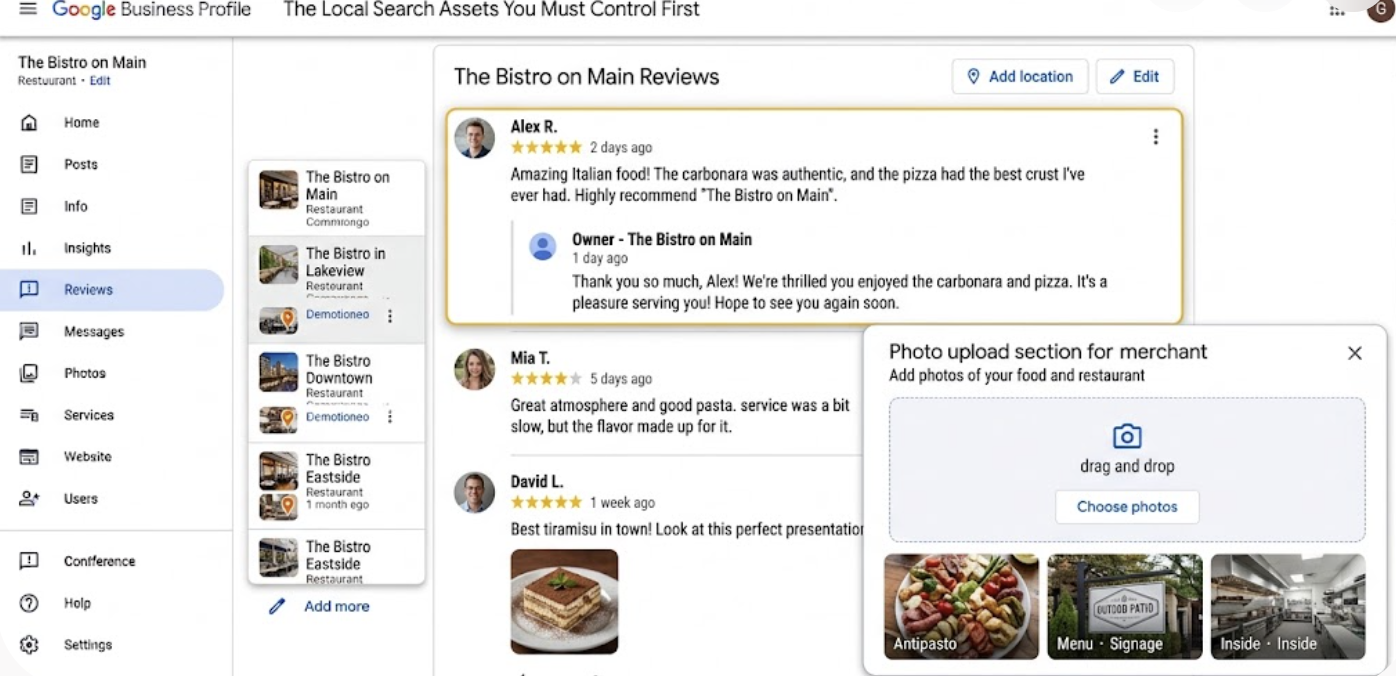
Your Google Business Profile is the single most important asset you control. Choose the most specific primary category available, such as the exact cuisine type, and add secondary categories that reflect how you actually operate. Fill in attributes like outdoor seating, wheelchair access, and takeout, because these feed filtered searches.
Keep hours accurate, including holiday hours, since wrong hours drive both lost visits and negative reviews. Upload your menu directly to the profile and refresh it whenever prices change. Add high quality photos regularly, because listings with fresh images earn more clicks. Finally, seed and monitor the Q&A section, answering common questions before a guest has to ask them.
NAP Consistency and Directory Coverage
Your name, address, and phone number must match exactly everywhere they appear. Inconsistencies across Apple Maps, Bing Places, Yelp, and local directories confuse both customers and search engines. Pick one canonical format and enforce it across every listing.
Beyond the major platforms, claim listings in local chambers, neighborhood guides, and industry directories. Each consistent citation reinforces that your business is real and located where you say. This is unglamorous work, and it is the difference between a profile that ranks and one that stalls.
Location Page Architecture
For a single location, your homepage can carry most of the local weight, but a dedicated location page with directions, parking details, and neighborhood context still helps. For multi-location restaurant seo, architecture matters far more. Each location needs its own unique page with its own copy, photos, hours, and menu variations.
Do not duplicate one page across locations with the city name swapped. That approach reads as thin content and rarely ranks. Write genuinely distinct copy for each location, referencing the actual neighborhood, the specific parking situation, and any location specific offerings. If you operate franchise locations, give each one a page under a clear URL structure and link them from a locations hub.
Handle service areas, parking, and delivery zones in the on-page copy itself. Tell guests where to park, which entrances to use, and how far you deliver. These details reduce friction and give search engines concrete local signals to match against real queries.
Menu, Dish, and Cuisine Keywords That Actually Convert
Most restaurant keyword research stops at city plus cuisine, which misses where the demand actually lives. Guests search for dishes, dietary needs, and occasions far more often than they search for a generic category. This is the section where a little research pays off disproportionately.
Finding the Right Keywords
Start with dish level terms. If you serve ramen, you want to rank for the specific styles you make, not just the word ramen. Add cuisine modifiers, such as regional styles or preparation methods, because these attract guests who already know what they want.
Layer in dietary and occasion searches. Vegan brunch, gluten free pasta, private dining, late night food, and date night spots all represent real intent. These queries often have less competition and convert better because the guest has a specific need you can satisfy.
Mapping Keywords to Pages
Not every keyword deserves its own page. Map broad cuisine terms to your main menu page, category terms to menu category pages, and specific dish terms to individual dish pages or menu sections. Supporting blog content handles occasion and dietary searches that need explanation.
For example, a blog post about where to find vegan brunch nearby can rank for that query and link directly to your brunch menu. That internal link passes authority to the page that actually converts. Every blog post you write should link to a menu page, a reservation page, or both, using descriptive anchor text rather than generic phrases.
Schema Markup for Restaurants
Structured data helps search engines understand your content and can produce rich results. Implement LocalBusiness or the more specific Restaurant schema on your location pages, including address, hours, price range, and cuisine type.
Add Menu schema to your menu pages, marking up sections and individual items where practical. This tells search engines exactly what you serve, which supports dish level visibility. Keep your markup accurate and updated, because outdated structured data can misrepresent your offerings.
A Keyword to Page Map
Think of your keyword strategy as a routing system. Dish and cuisine queries flow into menu category pages and individual dish pages, each tagged with the appropriate schema type. Occasion and dietary queries flow into supporting blog posts, which then link back to the menu and reservation pages. Every destination has a job, and every path ends at a page where a guest can book or order.
Turning Rankings Into Reservations and Direct Orders
Ranking is only half the job. If a guest finds you and cannot easily book or order, the ranking did nothing. This is where most restaurant seo efforts quietly fail, and where the conversion layer earns its keep. Here is what we focus on.
- Make click to call the easiest action on the page. On mobile, your phone number should be tappable everywhere it appears, because a large share of restaurant traffic is a guest deciding to call right now.
- Put a reservation widget above the fold. Embed your booking tool directly rather than linking out, since every extra tap loses a percentage of guests who were ready to commit.
- Add a clear order online button for takeout and delivery. If you offer direct ordering, make it as prominent as any marketplace link, and label it so guests know it is your own system.
- Build a review generation workflow. Ask for reviews at the moment of satisfaction, such as with the check or a follow up message, and respond to every review, positive or negative, in a professional voice.
- Invest in photo and video content. Real images of your dishes and space influence click through in search results and on your profile, and they set accurate expectations that reduce disappointing visits.
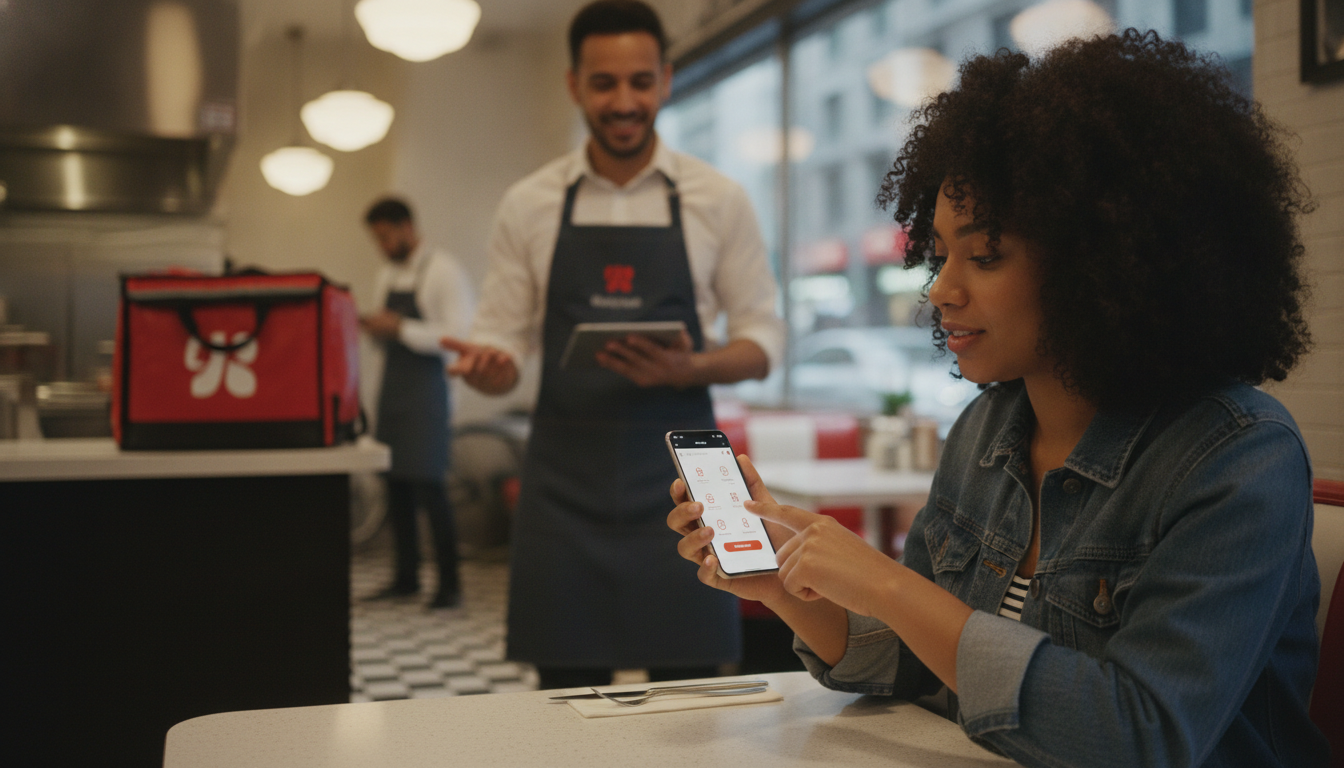
- Steer marketplace traffic back to owned channels. Include a first party offer in every delivery bag, such as a discount for ordering direct next time, so you convert a commissioned guest into a direct one.
Each of these steps shortens the distance between a search result and a paying guest. The goal is not more traffic for its own sake, but fewer taps, fewer distractions, and a clearer path to a table or an order. Review management deserves special attention here, because your rating affects both ranking and whether a guest trusts the click at all.
Measuring What Matters: Calls, Directions, and Bookings
You cannot prove value without measurement, and restaurants have a specific set of actions that matter. Traffic alone tells you little. What matters is whether people called, got directions, booked, or started an order.
The Metrics to Track
Google Business Profile reports several actions directly: calls, direction requests, and website clicks. These are your top of funnel local signals. Below them, track reservation completions and order starts on your own site, since those are the outcomes that produce revenue.
Use UTM tagging on every link you control so you can see which channels drive which actions. Set up call tracking numbers where practical to attribute phone calls to specific campaigns. In GA4, configure events for reservation submissions, order button clicks, and menu page views so you can connect behavior to bookings.
A Simple Monthly Reporting Loop
Build a one page monthly report that shows profile actions, website conversions, and a short note on what changed. Compare month over month rather than against arbitrary benchmarks, and tie each movement back to a specific piece of work.
The point of this loop is not reporting for its own sake. It is to show which activities produce covers and revenue, so you can do more of what works and stop what does not. When you can point to a rise in direction requests or reservation completions after a set of changes, the value of the work becomes obvious to anyone reviewing it.
Common Restaurant SEO Mistakes and How to Fix Them
Most struggling restaurant accounts fail for a handful of predictable reasons. If you inherit a messy account, the temptation is to fix everything at once, which usually means fixing nothing well. Here are the failures we see most and how to address each.
- Duplicate location pages. Franchise and multi location sites often reuse one page across every address. Rewrite each location page with unique copy, local details, and its own photos so search engines can tell them apart.
- Stale menus. Outdated prices and missing dishes erode trust and hurt relevance. Set a monthly reminder to update menu content and the menu on your Google Business Profile.
- Ignored reviews. Unanswered reviews, especially negative ones, cost you clicks. Build a response workflow with a target turnaround, and respond in a calm, professional tone every time.
- Keyword stuffed city pages. Pages that repeat a city name without useful content read as spam. Replace them with genuinely helpful location pages that answer real guest questions.
- Missing schema markup. Without Restaurant, Menu, and LocalBusiness structured data, you forfeit rich results. Add the markup to the correct page types and keep it accurate.
- Treating delivery apps as the only channel. Relying solely on marketplaces means paying commissions forever. Build your own ordering path and promote it consistently.
If you are triaging a messy account, fix the foundation first: correct your Google Business Profile, resolve duplicate pages, and add schema. Then move to content and reviews. That order prevents you from optimizing pages that should not exist in the first place.
Your 90-Day Restaurant SEO Action Plan
A restaurant SEO program works best when it is sequenced. Trying to do everything in week one leads to abandoned projects. This plan spreads the work across twelve weeks and assigns clear responsibilities.
- Weeks 1 and 2, audit and Google Business Profile cleanup. Claim and verify your profile, correct categories and attributes, fix hours, upload a current menu, and add photos. The owner supplies accurate details while the agency handles the technical cleanup.
- Weeks 3 and 4, on-page fixes and schema. Rewrite thin or duplicate location pages, fix title tags and headings, and implement Restaurant, Menu, and LocalBusiness markup. The agency builds it, and the owner reviews the copy for accuracy.
- Weeks 5 through 8, content and review generation. Publish dish and occasion focused pages and posts, link them to menu and reservation pages, and launch a review request workflow. The owner drives review requests at the table while the agency produces and optimizes content.
- Weeks 9 through 12, tracking and iteration. Set up UTM tagging, call tracking, and GA4 events, then build the monthly reporting loop. Review the first month of data together and adjust the plan based on what actually moved.
The division of labor matters. Owners know the food, the guests, and the neighborhood, so they own accuracy and review requests. An agency owns the technical work, the content production, and the measurement. Keep a one page deliverables summary that lists exactly what is produced each phase, so expectations stay clear and progress is easy to verify.
Making seo for restaurants a repeatable system
The takeaway is simple. Treat seo for restaurants as a local intent and conversion system rather than a checklist you complete once. Profiles, pages, keywords, and measurement all feed the same goal, which is a guest choosing you directly instead of a marketplace.
The stakes compound. Every month you leave map pack visibility unclaimed, a competitor takes those covers. Every month you rely on delivery apps, you pay commissions on customers you could have owned. These costs add up quietly, and they are hard to reverse later.
If you would rather hand this to people who do it every week, bring the problem to HaloSEO. We build the foundation, the content, the conversion path, and the reporting that ties it all back to tables filled and orders placed directly with you.