SEO Software for Small Business: What It Can and Cannot Do
You run a business. You answer the phone, quote the work, order the parts, and close up at night. Somewhere in the back of your mind sits a nagging thought that you should be doing more with your website, and someone has probably told you to buy seo software to make that happen.
Maybe you tried a free trial, stared at a dashboard full of numbers, and closed the tab. That is a normal reaction, not a failure on your part. This post will help you understand what seo software genuinely does, what it cannot do no matter how much you pay, and how to decide between software, an agency, or some mix of the two.
What SEO Software Actually Does for a Small Business
SEO software is a tool that gathers and organizes information about how your website shows up in search results. It connects to your site and to search engines, then pulls data into one place so you can see what is happening without checking ten different things by hand. That is the whole job. It collects, sorts, and reports.
Most tools cover the same core features. A site audit crawls your pages and flags broken links, slow loading, missing page titles, and other technical problems. Rank tracking shows where your business appears for the words you care about. Keyword research suggests phrases people actually type into Google. Backlink checks show which other websites link to you, which search engines read as a sign of trust.
Why You Still Need Some Automation
You cannot check all of that manually. Nobody has time to test their own page speed on every page every week or to log where they rank for forty phrases. Automation handles the boring repetition so your limited hours go toward things only a human can do.
Here is the part that matters most. Software gives you data. It does not give you decisions.
A report can tell you that your contact page loads slowly or that you rank fourteenth for a phrase. It cannot tell you whether fixing that page will bring in more paying customers or whether that phrase is worth chasing at all. That gap between data and judgement is where most small business owners get stuck, and it is the gap we help close.
SEO Software vs Hiring an Agency: A Side by Side Look
This is the comparison most owners actually want, so let us put it in one place.
| Factor | SEO Software | Hiring an Agency |
|---|---|---|
| Cost | Low monthly fee, predictable | Monthly retainer, usually much higher |
| Your time | Hours per week, every week | Minimal after onboarding |
| Expertise | Whatever you teach yourself | Experienced team on your account |
| Speed | Slow, depends on your effort | Faster, work happens in parallel |
| Control | Total, you own every decision | Shared, you approve the plan |
What Each Side Does Well
Software wins on cost and control. You pay a small predictable amount and you decide what happens next. If you enjoy learning and can protect a few hours a week, it is a genuinely good fit.
An agency wins on time and expertise. A team can run audits, write content, fix technical issues, and manage your local listings while you serve customers. You are buying back your hours and borrowing experience you have not built yet.
Where Each Side Loses
Software loses when nobody logs in. A tool you do not use is a subscription you donate to. It also cannot write for you or make judgment calls about your market.
Agencies lose when communication breaks down or when the work becomes generic. You are also paying for that team whether the results come quickly or slowly, which stings for a business with tight cash flow. Read the table against your own week. If you have more time than money, software. If you have more money than time, an agency.
The Cost Question: Is SEO Software Worth It for You?
Software costs are predictable and usually small. You know the number every month, and you can cancel whenever you want. An agency retainer is a much larger commitment, often locked into a contract, and you feel it in your cash flow even in a slow month. That difference alone pushes many owners toward software first.
The Cost Nobody Counts
Your own time is the hidden line item. If you spend five hours a week learning a tool and acting on it, that is five hours you did not spend on jobs, quotes, or your family. Multiply those hours by what your time is worth to you. Sometimes the cheap option is the expensive one.
Cheap seo software is genuinely enough when your goals are simple. Tracking a handful of local phrases, keeping your site technically clean, and watching your reviews does not require an enterprise plan. It is not enough when you need content written, links built, or a real strategy for a competitive market.
Here is a simple break even way to think about it. If the tool costs less per month than one new customer is worth to you, and you honestly believe you will use it, buy it. If you cannot picture yourself logging in twice a week, save the money and hire help instead.
Where SEO Software for Local Business Falls Short
Software is a great assistant and a terrible replacement for a human who knows your market. Here is where it runs out of road.
- It cannot build real relationships or local citations by hand. Getting listed in a chamber directory, a supplier's website, or a community page often takes an email, a phone call, or a favor. A tool can find the opportunity, but somebody still has to do the asking.
- It cannot write content that sounds human or on brand. Software can suggest a topic and outline it. It cannot capture how you actually talk to customers, and generic writing reads as generic to both people and search engines.
- It cannot judge which keywords actually bring paying customers. A phrase can have high search volume and zero buying intent. Knowing the difference takes market knowledge that no dashboard has.
- It cannot fix a bad offer or a weak website. If your prices are confusing or your site does not load on a phone, better rankings will just send more people to a page that does not convert.
In practice this is where people get stuck. They buy a tool expecting it to do the human work, then wonder why nothing changes. The tool did its job. The human part was never assigned.
A Simple Process to Pick and Use SEO Software Without Wasting Money
You do not need a complicated evaluation. You need a short process you will actually finish.
- List your top ten local search terms. Write down the phrases a real customer would type to find a business like yours, including your service plus your area. Keep it to ten so the list stays usable.
- Pick one tool and one job. Choose a single piece of software and give it one purpose, like tracking those ten phrases. Resist the urge to buy three tools before you have used one.
- Run a baseline audit and save the report. This is your before picture. Save it somewhere you will find it in three months, because you cannot measure progress without a starting line.
- Track weekly and act on one fix at a time. Set a recurring reminder, look at your ten phrases, and pick one problem to solve. One fix done beats ten fixes planned.
- Review after 90 days and cancel what you do not use. Look at what changed and what you ignored. If a tool has not earned its fee, cancel it without guilt.
I would start with steps one and two only, and I would spend a full month there before adding anything else. The close is simple. A small process you follow beats a big process you abandon.
Common Mistakes Small Business Owners Make With SEO Tools
The most common mistake is buying too many tools before doing any work. Owners sign up for three platforms in one week, get overwhelmed by overlapping dashboards, and quit. One tool used well beats five used never.
Chasing Numbers That Do Not Pay
Vanity metrics are the second trap. Domain authority and similar scores feel important because they are numbers, but they do not pay your bills. A high score with no calls is worse than a modest score with a full schedule. Watch inquiries, calls, and form fills instead.
Ignoring local map results and reviews is another quiet killer. Many local searches end in the map pack, not the standard results, and reviews heavily influence who gets clicked. No software will respond to your reviews for you.
Finally, reports pile up without action. A saved report you never read is just clutter. If you are not going to act on a metric, stop tracking it and put that attention somewhere useful.
Which Option Is Right for You?
Software is the right call if you have time and want control. You will learn as you go, you will keep your costs low, and you will own every decision. It suits owners who genuinely enjoy the puzzle.
An agency is right if you have budget and no time. You hand off the work, get expertise you have not built yet, and spend your hours on customers instead of dashboards. Many local businesses land on a hybrid, using cheap seo software for tracking while a team handles content and the harder technical work. That mix keeps costs sane and progress steady.
Your next step is small. Book a free 15 minute call with our team at HaloSEO, or download our checklist and work through it on your own. Either way, you will know exactly what your seo software should be doing for you.
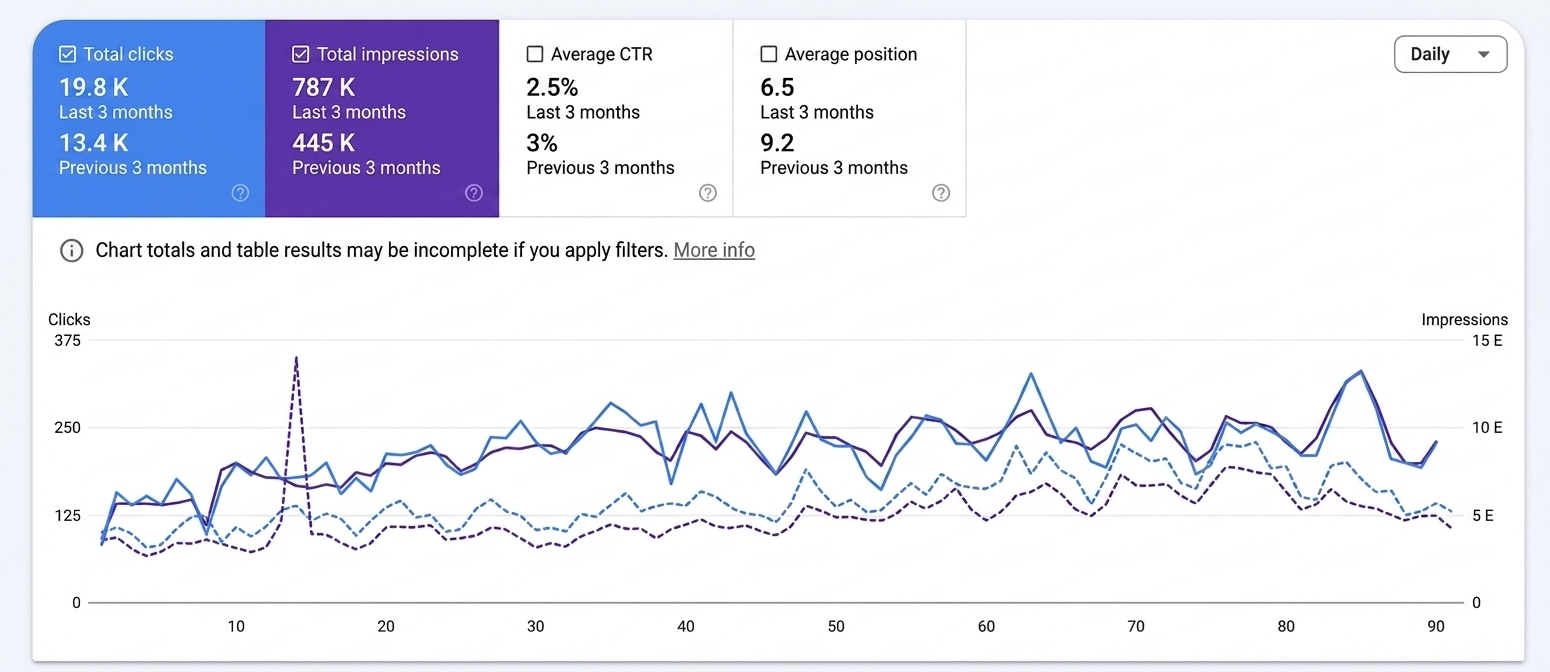
A post a day, every day, for 90 days. This is what that compounds into on a blog that starts from nothing.